Introduction
Technology is evolving at a speed that is transforming how people live, work, and interact with the world. Over the next decade, several emerging tech trends are expected to redefine industries, create new opportunities, and solve complex global challenges. From artificial intelligence to quantum computing, these innovations are not just improvements—they are revolutions in progress.
Understanding these trends helps individuals, businesses, and governments prepare for a future shaped by rapid digital transformation. This article explores the most important emerging technologies that will influence the next ten years.
Artificial Intelligence Becoming More Human-Like
Artificial intelligence is one of the most influential technologies of the modern era. It is already used in voice assistants, recommendation systems, and automated customer service. However, in the next decade, AI is expected to become far more advanced and human-like in understanding and decision-making.
Future AI systems will be able to process emotions, understand context more deeply, and interact naturally with humans. This will improve communication between machines and people, making technology feel more intuitive.
AI will also play a larger role in industries such as healthcare, education, finance, and transportation. It may help doctors diagnose diseases faster, assist teachers in personalized learning, and support businesses in making data-driven decisions.
As AI becomes more powerful, ethical use and regulation will become increasingly important to ensure safety and fairness.
Expansion of 5G and Next-Generation Connectivity
High-speed internet is the foundation of modern technology, and 5G networks are already transforming connectivity. Over the next decade, 5G will become more widely available, and even more advanced networks will begin to emerge.
Faster internet speeds will enable real-time communication between devices, making smart cities and connected systems more efficient. Self-driving cars, remote surgeries, and advanced virtual reality experiences will depend on ultra-fast and reliable connections.
Improved connectivity will also support remote work and global collaboration. People will be able to communicate and share data instantly from anywhere in the world.
As technology advances, connectivity will become the backbone of almost every digital innovation.
Growth of Quantum Computing
Quantum computing is one of the most powerful emerging technologies. Unlike traditional computers, quantum computers use quantum bits that can process vast amounts of data simultaneously. This allows them to solve complex problems much faster than current systems.
In the next decade, quantum computing could revolutionize fields such as medicine, cybersecurity, and scientific research. It may help develop new drugs, improve climate modeling, and solve mathematical problems that are currently impossible for classical computers.
However, quantum technology is still in early development. As it matures, it will require new approaches to security because it could break current encryption systems.
Despite the challenges, quantum computing has the potential to reshape the future of technology and science.
Rise of Extended Reality (VR and AR)
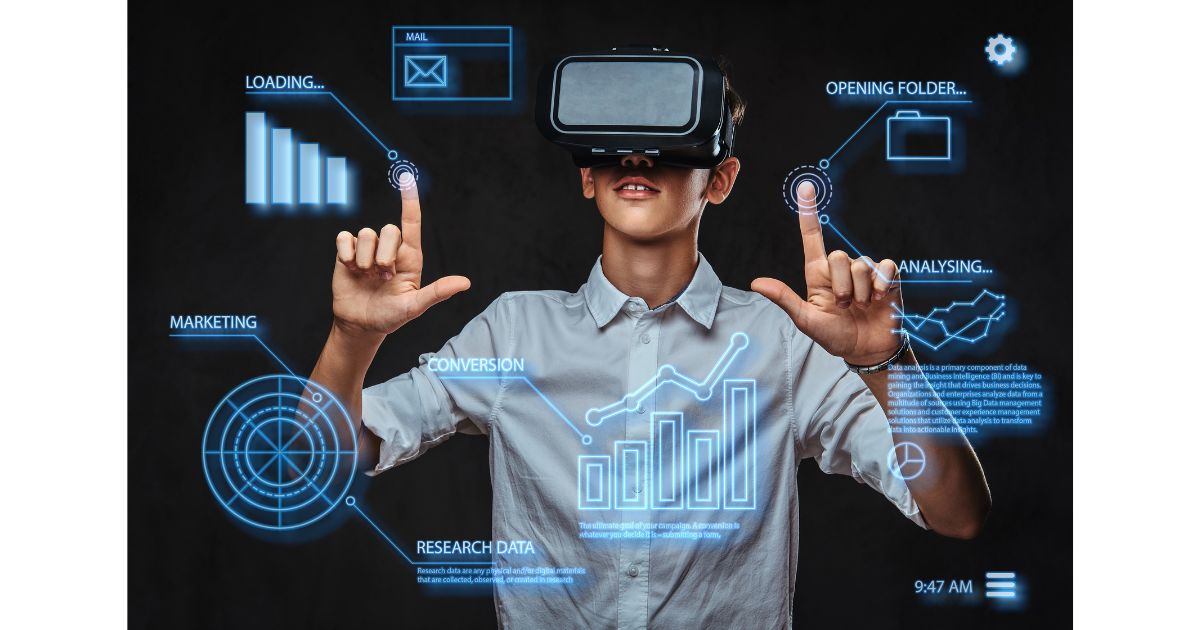
Extended reality, which includes virtual reality and augmented reality, is becoming more advanced and accessible. These technologies create immersive digital experiences that blend the physical and virtual worlds.
In the next decade, VR and AR will be widely used in gaming, education, training, and entertainment. Students may attend virtual classrooms where they can explore historical places or conduct science experiments in a simulated environment.
In workplaces, AR glasses may help workers access real-time information while performing tasks. For example, technicians could see repair instructions directly on equipment.
Entertainment will also become more interactive, allowing users to experience games and movies in fully immersive environments.
As devices become lighter and more affordable, extended reality will become part of everyday life.
Growth of Autonomous Systems
Autonomous systems are technologies that can operate without human intervention. These include self-driving cars, drones, and automated robots. Over the next decade, these systems will become more reliable and widely used.
Self-driving vehicles may reduce traffic accidents and improve transportation efficiency. Delivery drones could make shipping faster and more convenient, especially in urban areas.
In industries such as manufacturing and agriculture, robots may handle repetitive and physically demanding tasks. This can improve productivity and reduce human workload.
As autonomous systems become more advanced, safety regulations and ethical considerations will be important to ensure responsible use.
Advancements in Biotechnology
Biotechnology is another rapidly growing field that combines biology and technology to improve health and life sciences. In the coming decade, biotechnology is expected to make major breakthroughs in medicine and healthcare.
Gene editing technologies may help treat genetic diseases and improve human health outcomes. Personalized medicine could become more common, where treatments are tailored to individual genetic profiles.
Biotechnology may also improve food production through lab-grown meat and genetically optimized crops. This could help address global food shortages and environmental challenges.
As research continues, biotechnology will play a key role in improving quality of life and sustainability.
Artificial Intelligence in Creativity
AI is not only changing technical fields but also creative industries. In the next decade, AI will become a powerful tool for artists, writers, musicians, and designers.
AI systems can already generate images, music, and written content. In the future, they will become more sophisticated and capable of collaborating with humans in creative processes.
This does not mean AI will replace human creativity. Instead, it will act as a support tool that enhances imagination and productivity.
New forms of digital art and entertainment will emerge as humans and AI work together in creative environments.
Cybersecurity Becoming More Critical
As technology grows, so do cyber threats. In the next decade, cybersecurity will become one of the most important areas of technology development.
With more devices connected to the internet, protecting data and systems will be essential. Cyberattacks may become more complex, requiring advanced security systems powered by AI and machine learning.
Businesses and governments will invest heavily in cybersecurity to protect sensitive information and maintain trust.
Users will also need to become more aware of online safety practices to protect themselves from digital threats.
Conclusion
The next decade will be defined by rapid technological innovation. Emerging trends such as artificial intelligence, quantum computing, extended reality, and biotechnology will transform every aspect of life.
These technologies will create new opportunities, improve efficiency, and solve major global challenges. However, they will also bring new responsibilities, including ethical use, security, and accessibility.
As the world moves forward, adapting to these changes will be essential. The future of technology is not just about machines—it is about how humans use innovation to build a better, smarter, and more connected world.